Companion care or personal care? How to tell what your parent needs
Plain-language definitions, a side-by-side comparison, everyday examples and a checklist to help you notice what kind of help would make the biggest difference.
Key points
- Companion care is company and everyday practical help: conversation, shared activities, meals and errands. It is not hands-on.
- Personal care is hands-on help with the body: bathing, dressing, grooming, toileting, eating and moving safely around the home.
- Neither is medical care. In Georgia, nursing services can only be provided by a licensed nurse.
- Many families start with one and combine both as needs change. Watching for a couple of weeks usually shows which matters most.
The short answer
The difference is whether help is “hands-on.” Companion care keeps someone company and helps with the practical side of the day. Personal care helps with the body itself: washing, dressing, using the bathroom, eating, and getting around the home safely.
Georgia’s rules for private home care providers draw the same line. They describe companion or sitter tasks (opens in a new tab) as “transport and escort services; meal preparation and serving; and household tasks essential to cleanliness and safety.” Personal care tasks start with “assistance with bathing, toileting, grooming, shaving, dental care, dressing, and eating,” and can also include help moving around and some limited health-related tasks, described below.
What companion care usually includes
Companion care is for someone who can still manage their own personal routines but is spending too much time alone, or finding parts of the day harder to organize. Depending on the provider and what’s agreed, it may include:
- Conversation, company and regular check-ins
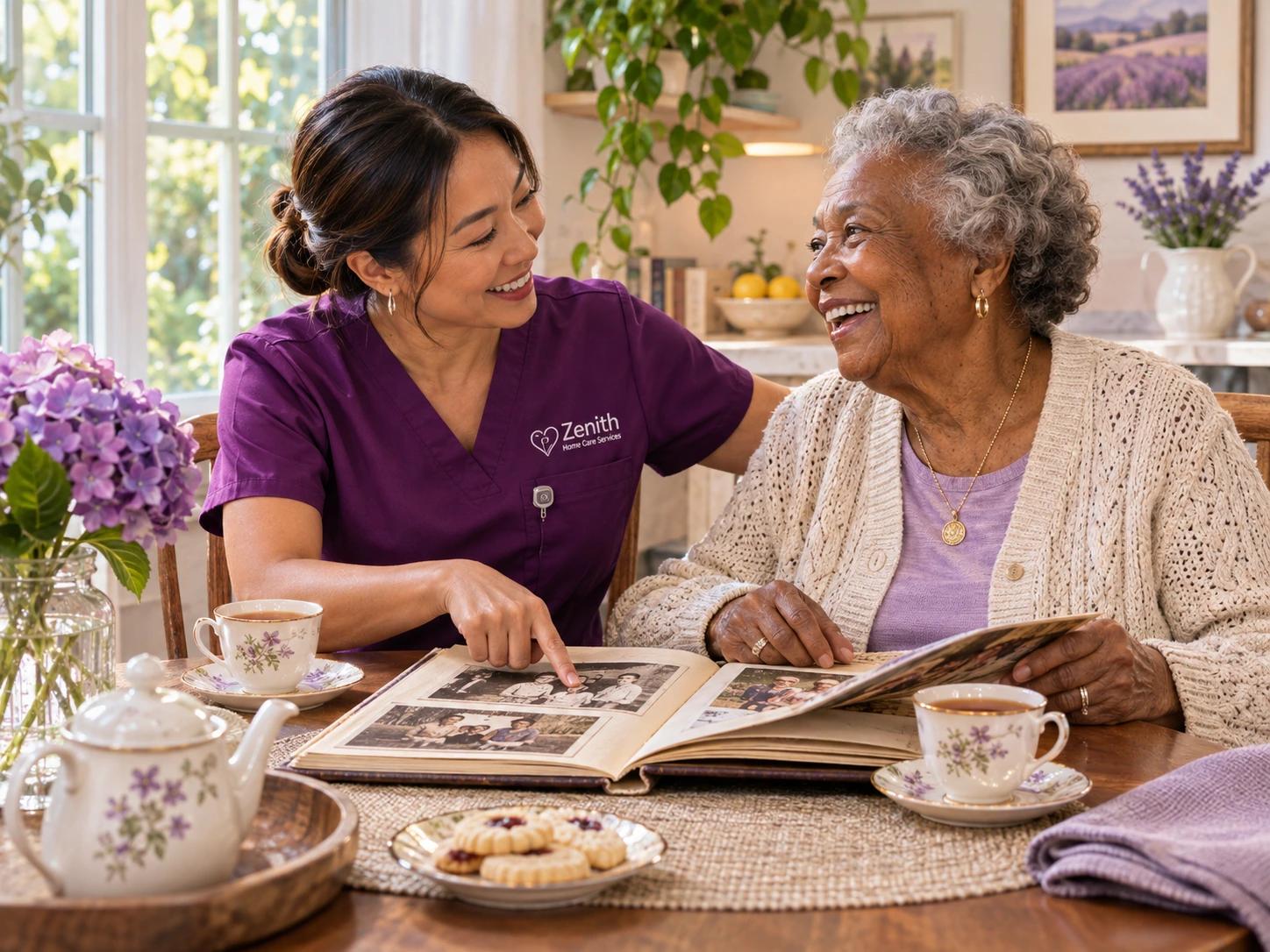
- Shared activities: cards, puzzles, music, reading, old photographs, a short walk
- Help preparing and serving a meal, and company while eating
- Going along on errands or appointments (ask each provider whether transportation is part of it)
- Gentle encouragement to keep up hobbies and daily routines
What companion care doesn’t include is hands-on help with bathing, dressing or toileting. See Zenith’s companion care for how Zenith approaches it.
What personal care usually includes
Personal care is for someone who needs a steady hand with the private routines of the day. It may include:
- Help with bathing or showering, grooming and shaving
- Help getting dressed and ready for the day, or for bed
- Toileting and continence support, handled discreetly
- Help at mealtimes, including eating
- Support moving around the home, and getting up from a bed or chair
Good personal care starts from how the person likes things done and protects their privacy and choices. See Zenith’s personal care for how Zenith approaches it.
Companion care and personal care side by side
| Comparison | Companion care | Personal care |
|---|---|---|
| Main purpose | Company, connection and everyday practical help | Hands-on help with personal routines |
| Typical help | Conversation, activities, meals, errands | Bathing, dressing, grooming, toileting, eating, moving safely |
| Hands-on help with the body | No | Yes |
| Often suits | Someone who is lonely, isolated or no longer driving | Someone who feels unsteady or finds self-care tiring or unsafe |
| Medical tasks | Not included | Not included |
Everyday examples
These are illustrations, not real families, to show how the choice often plays out.
When companion care may be the better fit
Your mother still showers and dresses on her own, but since she stopped driving she rarely leaves the house. When you call, the days sound the same. A regular companion visit, with conversation, a shared lunch and a trip to the store, may be what lifts the week.
When personal care may be the better fit
Your father has started skipping showers. He says he’s fine, but you notice he holds the counter when he stands and wears the same sweater for days. A caregiver who can help him bathe safely and get ready in the morning, at his pace, may matter more than company.
When a family combines both
Many families find the answer is “some of each”: help getting ready in the morning, then company and a meal later in the day. Needs also change over time, so it helps when a plan can be adjusted rather than started again.
An observation checklist for families
Before deciding, it helps to notice what actually happens over a week or two. Visit at different times of day if you can, and write down what you see rather than what you’re told.
Signs that company and everyday help may make the biggest difference
- Long stretches without conversation, or fewer calls and visits from friends
- Little food in the house, or meals often skipped or replaced with snacks
- Mail, errands or appointments piling up
- Hobbies and outings dropped since driving stopped
- Seeming low, bored or withdrawn
Signs that hands-on help may be needed
- Changes in hygiene: hair unwashed, the same clothes for several days, body odor
- Avoiding the shower or bath, or feeling unsteady getting in and out
- Difficulty with buttons, shoes or getting ready for bed
- Holding onto furniture to move around, or difficulty getting up from a chair
- Accidents with continence that they may be embarrassed to mention
Signs to raise with their doctor first
- A fall, or several near-falls
- Confusion about medication, or doses missed or doubled
- New or worsening memory problems, or getting lost in familiar places
- Weight loss, a wound that isn’t healing, or any sudden change in health
Where non-medical care stops
Companion care and personal care are both non-medical. In Georgia, the private home care rules say nursing services “can only be provided by a person licensed as a Registered Professional Nurse or Licensed Practical Nurse.” The same rules exclude physical, speech and occupational therapy from private home care services.
The rules also let personal care include some “medically related activities,” such as accompanying someone to medical appointments, picking up prescriptions or reminding them to take medication, but not “professional services” that require a professional license. Providers differ in which of these they offer, so ask each one exactly what is and isn’t included.
Zenith’s support is non-medical. It doesn’t include:
- Administering medication or managing prescriptions
- Wound care, injections or catheter care
- Physical, occupational or speech therapy
- Medical monitoring or clinical assessments
If your parent needs skilled care at home after an illness or hospital stay, their doctor can advise whether home health services are appropriate. Medicare’s home health benefit (opens in a new tab) is for skilled care and doesn’t pay for personal care when that is the only care someone needs. Non-medical care can work alongside clinical care, but it doesn’t replace it.
Talking it through with Zenith
Zenith is a private-pay home care provider: care is arranged and paid for directly by the family or the person receiving care. You can talk through the type of support your loved one needs, the schedule that would help and the costs with Zenith before anything is arranged. Many families combine companion care and personal care as needs change, and you’ll know which tasks are included and which need a licensed clinician before support begins.
Sources
Sources checked November 24, 2026.
- Rules and Regulations for Private Home Care Providers, Chapter 111-8-65: Rules .03 (Definitions), .05 and .09, final adoption text (2026) (opens in a new tab). Georgia Department of Community Health. Used for: How Georgia defines companion or sitter tasks, personal care tasks, medically related activities and nursing services.
- Ga. Comp. R. & Regs. R. 111-8-65-.03, Definitions (unofficial compilation) (opens in a new tab). Cornell Legal Information Institute. Used for: A second, compiled copy of the same definitions, checked for identical wording.
- Home health services coverage (opens in a new tab). Medicare.gov (Centers for Medicare & Medicaid Services). Used for: What Medicare’s home health benefit does and doesn’t pay for.
Published by Zenith Home Care Services. General information for families, not medical, legal or financial advice.